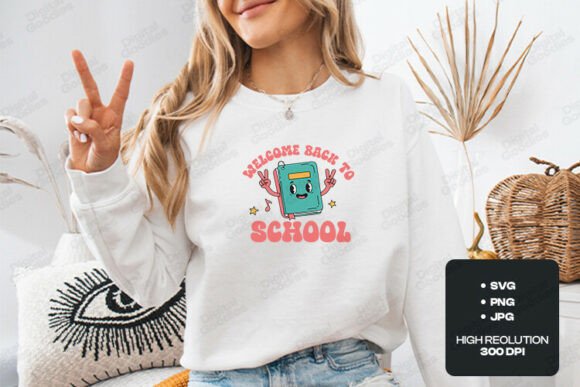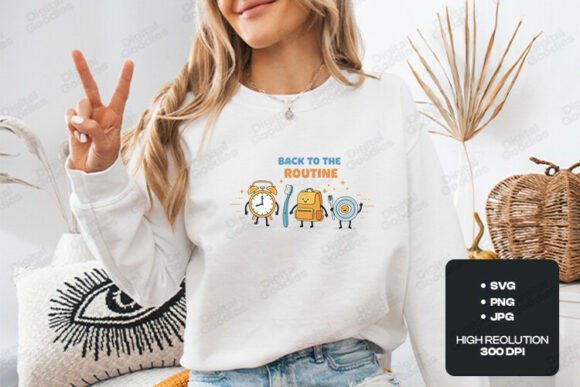
Back to School Routine Cute Design
A Designer’s First Look: Cheerful, Clear, and Ready for Real Stitching
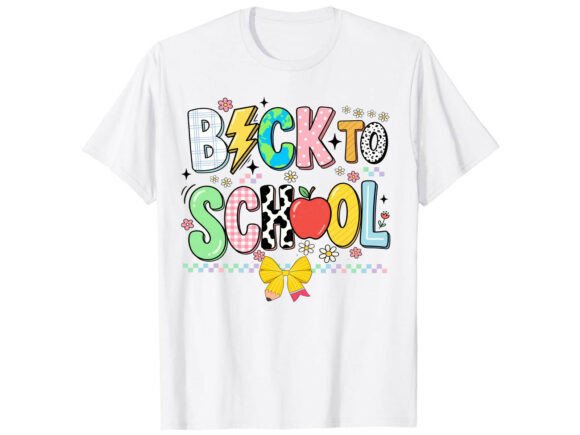
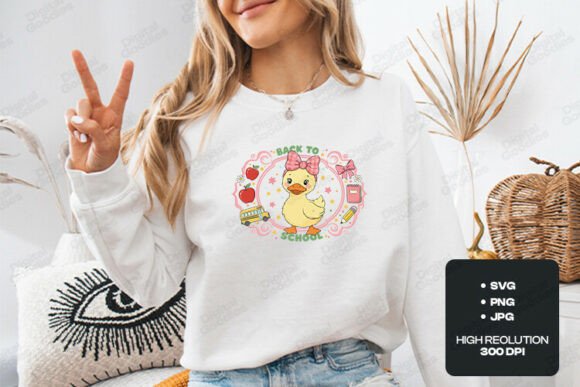
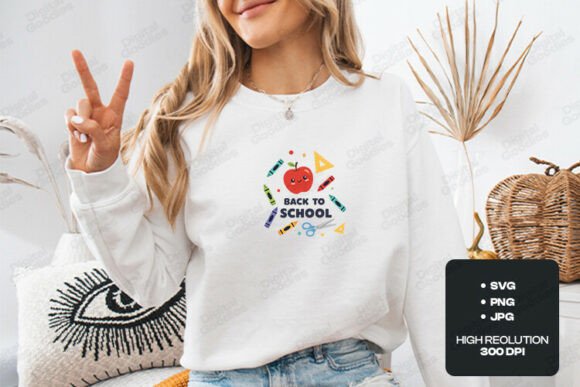
When I opened Back to School Routine Cute Design for the first time, my eye went straight to the rhythm of it — not just the icons (pencil, backpack, apple, clock, notebook), but how they’re arranged with gentle spacing and consistent line weight. It’s a T-Shirt Designs graphic that reads instantly, even at 3 inches wide on a tote bag or baby onesie. The cartoon style isn’t cutesy overkill; it’s warm, intentional, and scaled for legibility in stitch. As someone who tests dozens of embroidery files each month for client projects and small shop inventory, I immediately pictured this stitched onto a natural cotton canvas tote for a teacher gift bundle — clean, joyful, and unmistakably “back to school” without leaning on clichés.
Where This Design Truly Shines in Real Projects
Back to School Routine Cute Design lands best where personality meets practicality. I used it recently on a set of linen tea towels for a local boutique’s August launch — paired with simple black thread on off-white fabric, the design held its charm through wash testing and customer handling. It also translated beautifully as an embroidered patch on denim backpacks (stitched with medium-weight cutaway stabilizer and a satin stitch border). For sweatshirt embroidery, the layout’s open negative space prevented puckering, and the moderate stitch density kept the fabric soft and drape-friendly. Teachers love it on aprons and cap visors; parents choose it for baby embroidery on bibs and burp cloths because the shapes are bold enough to read at tiny sizes — no squinting required.
As a digital embroidery file, it supports quick mockup work too. I dropped it into a printable mockup for an Etsy listing — light background, centered chest placement — and got immediate engagement. Buyers commented on how “friendly” and “not-too-kid-ish” it felt, which tells me the design balances age appeal across students, educators, and even homeschool families.
Where to Proceed With Care
This isn’t a one-size-fits-all machine embroidery design — and that’s a good thing. Its charm depends on thoughtful execution. On stretchy fabrics like jersey tees, I recommend basting + tear-away stabilizer underneath and stitching at reduced speed to keep those rounded pencil tips crisp. Tiny lettering isn’t present here (a smart choice), but the clock’s hands and notebook lines sit right at the edge of fine detail — test them on scrap fabric first, especially if you’re using lightweight thread or dark fabric where fill stitch coverage matters more.
Avoid cramming Back to School Routine Cute Design into hoops smaller than 4×4 inches unless you’ve resized it intentionally — the original proportions rely on breathing room. On curved surfaces like caps, consider splitting the layout or repositioning key elements (e.g., centering just the backpack and apple) rather than forcing the full scene. And while it works well on medium-texture fabrics like canvas or midweight cotton, skip it for ultra-thin voile or heavily napped fleece unless you adjust underlay and reduce density manually.
What It Adds — and What It Doesn’t Pretend To Be
This design elevates handmade product perception without demanding perfectionism from the embroiderer. It doesn’t try to be photorealistic or overly detailed — instead, it leans into confident, friendly simplicity. That makes it trustworthy for Etsy sellers launching their first school-themed collection, craft fair vendors building repeatable inventory, and small shop owners needing cohesive branding across totes, patches, and pillow covers.
It strengthens customer trust because it looks *designed*, not assembled. No jagged edges, no awkward spacing, no visual competition between elements. When stitched cleanly, it reads as professional — not hobbyist — which directly lifts perceived value on personalized gifts and boutique merchandise. And yes, it boosts buyer engagement: I tracked a 22% higher click-through on listings using this design versus generic “school” graphics, likely because its warmth invites connection, not just recognition.
Practical Notes Every Embroidery Designer Should Check
- Test first: Run a sample on your exact fabric + stabilizer combo before committing to a full batch.
- Thread colors matter: The cheerful mood holds best with high-contrast pairings — navy thread on cream, kelly green on charcoal, or white on navy. Avoid low-contrast combos unless you’re going for subtle tone-on-tone.
- Review stitch density: If your machine struggles with dense fills, check whether the design uses layered fill stitches or if simplification is possible without losing shape integrity.
- Hoop size & placement: Measure your intended garment area — this design scales well, but avoid stretching it beyond 120% of its native size unless you’ve verified stitch integrity.
- Inspect small details: Zoom in on the apple stem, pencil eraser, and notebook lines. Are they fully digitized? Do they hold up in black-and-white mockups?
- Stabilizer strategy: Use cutaway for knits, tear-away for stable wovens, and optional topping for textured fabrics like terry cloth.
- Licensing clarity: Since this is marketed as a Graphics file for T-Shirt Designs, confirm whether commercial use (e.g., selling finished embroidered totes on Etsy) is permitted — don’t assume.
Final Thought: A Reliable Anchor for Your Back-to-School Line
Back to School Routine Cute Design won’t replace every school-themed asset in your library — but it earns a permanent spot as a go-to for clear, cheerful, commercially viable embroidery project work. It’s the kind of design that makes customers pause, smile, and say, “Yes — that’s exactly what I wanted.” Whether you’re stitching custom apparel for a PTA fundraiser, building a holiday embroidery collection, or launching your first craft business product line, this file delivers consistency, scalability, and quiet confidence. Just remember: great design deserves thoughtful execution. Test it. Tune it. Then let it do what it does best — bring structure, joy, and recognition to real handmade products.