First Day Llama Back to School T-Shirt
That “Aha” Moment—When a Design Feels Like It Belongs on Real Stuff
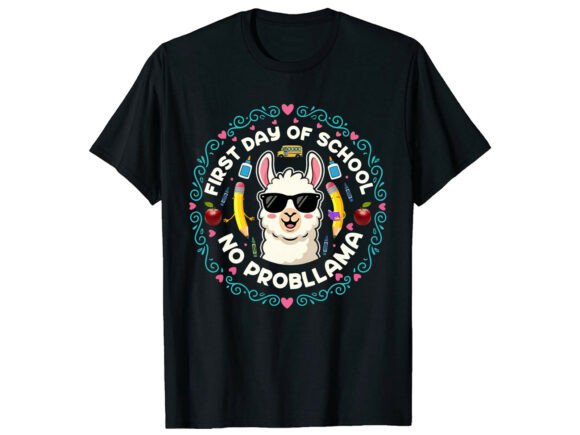
I pulled up the First Day Llama Back to School T-Shirt file last week while prepping for a custom order: three embroidered tote bags for a local preschool teacher’s welcome kit. Not t-shirts—totes. But the design immediately made sense there. The llama’s relaxed posture, bold sunglasses, and playful swirl of school-themed elements (a tiny apple, open book, pencil, backpack) landed with cheerful clarity—not cutesy overload, not too literal. It’s got rhythm. The composition breathes well, with intentional negative space around the central llama, which is huge for embroidery. No frantic cramming. That tells me this was designed *for stitch*, not just screen.
Where This Design Truly Shines (and Where It Asks for Thought)
The First Day Llama Back to School T-Shirt works beautifully on medium-to-heavyweight fabrics where stitch definition holds: sweatshirt fleece, canvas totes, cotton aprons, twill caps, and even sturdy tea towels. I stitched it on a navy organic cotton tote using 40-weight rayon thread—and the contrast between the vibrant thread and deep background made the llama pop without looking harsh. On baby onesies? Proceed with care. The sunglasses’ thin frames and small lettering in “No Probllama” risk fill distortion or skipped stitches on ultra-soft, stretchy knits unless you use lightweight cutaway stabilizer and reduce density slightly. Same goes for curved surfaces like baseball caps—the outer edges of the design may need minor digitizing tweaks to avoid puckering.
This isn’t a dense, high-fill machine embroidery design. It leans into satin stitch outlines and moderate fill stitch areas, which means it presses well, washes reliably, and doesn’t overwhelm lightweight garments. That makes it ideal for personalized gift projects—think embroidered pillow covers for first-day-of-kindergarten keepsakes or boutique-branded kitchen towels for back-to-school teacher appreciation bundles.
Real Talk About Fabric, Color, and Customer Trust
Thread color contrast matters more here than with photorealistic designs—and that’s a strength. The First Day Llama Back to School T-Shirt relies on clean shape recognition, not fine gradients. Test it in black-and-white mockups first. If the llama silhouette reads clearly against your chosen fabric tone (e.g., mustard thread on charcoal sweatshirts, sky blue on oatmeal tees), you’re golden. On dark fabric, avoid pastel thread choices—they’ll mute the energy. And if you’re listing this as a digital embroidery file for Etsy sellers or craft fair vendors, remind buyers to match stabilizer to fabric texture: tear-away for stable wovens, cutaway for knits, and fusible for lightweight linens.
Customers notice when stitching feels intentional—not rushed or pixelated. This design delivers that handmade product polish because its lines are confident, its curves smooth, and its scale generous enough to read at arm’s length. That builds trust. A parent buying a custom embroidered backpack for their child doesn’t want to squint at fuzzy letters—they want joy, clarity, and confidence. The First Day Llama Back to School T-Shirt delivers that feeling.
Smart Workflow Checks Before You Stitch
- Test on scrap fabric first—especially if pairing with textured materials like corduroy or terry cloth.
- Review stitch density—it’s balanced for most home machines, but always verify before hooping a client’s favorite hoodie.
- Confirm hoop size compatibility—the layout fits comfortably in a 5x7" hoop, but double-check your file’s actual dimensions before scaling.
- Inspect small details—the “ll” in “Probllama” and the sunglass arms are delicate; ensure your machine handles fine satin stitch consistently.
- Compare light/dark fabric backgrounds using printable mockups—you’ll see how much thread choice affects perceived brightness and friendliness.
- Use proper stabilizer—no shortcuts. Even simple designs lift or distort without support tailored to your fabric.
- Verify licensing—if you’re selling finished products or bundling this as part of a craft business kit, confirm commercial use rights before launch.
Why This Fits So Well in a Small Shop or Etsy Line
This isn’t just another graphic—it’s a versatile design asset with built-in storytelling. As a boutique owner, I’ve used the First Day Llama Back to School T-Shirt across three product categories in one season: embroidered patches sewn onto denim backpacks, heat-transfer-ready versions for no-sew tee kits, and simplified line-art variants for printable classroom welcome signs. Its visual personality bridges playfulness and polish—perfect for shops balancing handmade charm with professional presentation.
It also scales well emotionally. A teen wearing a sweatshirt with this design looks confident, not childish. A toddler’s onesie feels sweet but not saccharine. That duality is rare—and valuable—for creative entrepreneurs juggling multiple audiences. Plus, it avoids overused tropes (chalkboards, apples with faces, generic pencils). The llama adds wit and memorability. In a crowded T-Shirt Designs category, that’s a quiet competitive edge.
A Final Note on Intentional Use
The First Day Llama Back to School T-Shirt succeeds because it understands its role: it’s not background noise—it’s a friendly handshake at the start of something new. Whether you’re stitching it on a holiday embroidery project for a teacher’s gift basket or building a cohesive craft business collection around back-to-school themes, treat it like a collaborator. Respect its structure. Honor its scale. Let its sunny, low-stress energy come through in every stitch. That’s how a simple Graphics file becomes a beloved finished product.