Tooth Brush Doodle Pattern SVG PNG
A Smile That Stitches Well—Not Just a Cute Idea
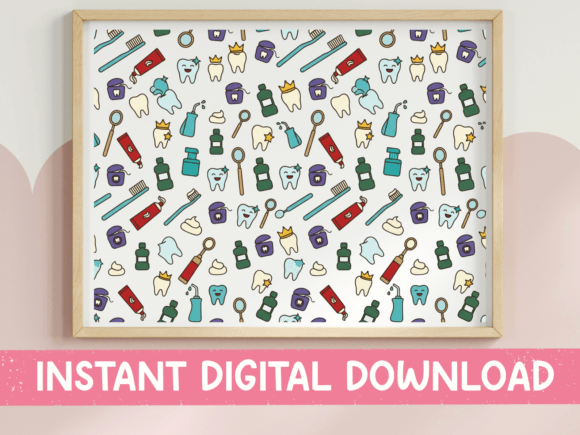
As someone who’s stitched dental-themed embroidery for pediatric clinics, baby boutiques, and dentist office gift shops, I opened Tooth Brush Doodle Pattern SVG PNG expecting charm—and got something more: a genuinely workable, joyful motif that translates well from screen to fabric. The first impression? A bright, cohesive repeat pattern—not chaotic, not cramped—with friendly cartoon teeth grinning alongside toothpaste tubes, floss spools, and tiny bubbles floating like confetti. It’s playful without being childish, detailed without tipping into embroidery-unfriendly clutter. This isn’t just a T-Shirt Designs graphic; it’s a machine embroidery design waiting for thoughtful execution.
Where It Shines: Real Projects, Real Fabric
Last week, I prepped a custom embroidered tote bag for a local dental hygienist’s “Healthy Smiles” giveaway. I chose Tooth Brush Doodle Pattern SVG PNG as the central panel motif—scaled to 4.5" wide—and stitched it on medium-weight canvas with tear-away stabilizer. The result? Crisp satin-stitched toothpaste caps, clean fill-stitch bubbles, and legible (but not fussy) floss strands. Customers loved the warmth and clarity—it felt handmade, not mass-printed. That same design later became an embroidered patch for a kids’ dental camp apron, and it held up beautifully after three rounds of washing. It works especially well on sweatshirt embroidery, tote bag design, and pillow covers where scale and rhythm matter more than hyper-detail.
The repeat layout is its quiet superpower. You can crop a 3"x3" section for a pocket accent or mirror and tile it across a tea towel—no awkward gaps or visual stutter. For Etsy sellers and small shop owners, that flexibility means one digital embroidery file supports multiple product lines: baby embroidery on onesies, holiday embroidery on kitchen towels, even subtle nursery decor on framed linen wall hangings. And because the palette leans into red, blue, green, and purple—colors that pop on both light and dark fabric—you’re not locked into white tees or pastel cottons.
Where to Pause—and Why
This isn’t a one-size-fits-all embroidery file. On stretchy fabrics like jersey or thin knits, the repeat’s density can cause puckering if stabilizer isn’t layered thoughtfully. I tested it on a lightweight cotton blend onesie and found the tiny bubbles and mirror outlines softened slightly—still recognizable, but less crisp than on stable twill. For baby embroidery or personalized gift items where softness and safety are priorities, consider simplifying the repeat to a single focal element (like one smiling tooth + tube) rather than the full pattern.
Caps and curved surfaces demand extra attention. The dental mirror and mouthwash bottle shapes have gentle curves that read well on flat panels—but when wrapped around a structured cap front, fine details compress. If you’re planning cap embroidery, run a test on scrap buckram first, and check how the floss spool’s winding lines hold up under tension. Also, avoid using the full repeat in small hoop sizes (under 4"). The tiny bubbles and brush bristles rely on stitch definition—shrink them too far and they blur into noise.
Stitch Density & Thread Choices Matter More Than You Think
Tooth Brush Doodle Pattern SVG PNG uses balanced fill stitch and satin stitch areas—not overly dense, but not sparse either. That’s good news for commercial embroidery: it stitches efficiently without sacrificing shape integrity. Still, thread color contrast is non-negotiable. On dark fabric, avoid light purple or pale green threads for the bubbles—they’ll vanish. Stick to high-contrast combos: navy thread on cream canvas, kelly green on charcoal, or true red on off-white terry cloth. Always test the embroidery file on scrap fabric *with your actual thread and stabilizer*, not just on-screen mockups.
What It Does for Your Craft Business—Beyond the Stitch
For Etsy sellers and handmade product creators, this design quietly lifts perceived value. It reads as intentional, not clip-art. Customers notice the consistency in line weight, the spacing between elements, the way the “happy teeth” all face the same gentle angle—it signals care. That builds trust, especially for personalized gift buyers who want assurance their custom apparel or embroidered patch feels special, not generic.
It also strengthens brand consistency for niche businesses: a pediatric dentist’s merch line, a wellness studio’s staff aprons, or a school nurse’s back-to-school giveaways. Because the theme is universally positive (not clinical or scary), it avoids alienating younger audiences while still feeling professional enough for boutique branding. And unlike many cartoon-style graphics, it doesn’t rely on text—so no worries about font legibility at small scales or translation issues for international craft fairs.
Practical Designer Notes Before You Stitch
- Always test Tooth Brush Doodle Pattern SVG PNG on scrap fabric matching your final project’s weight and texture—especially for baby embroidery or custom apparel meant for frequent washing.
- Review stitch density in your embroidery software. If filling large areas (like a full-towel repeat), confirm your machine handles the stitch count comfortably.
- Check licensing before selling finished products or digital embroidery files—this is a Graphics asset, so commercial use rights must be verified directly with the seller.
- Use proper cut-away or tear-away stabilizer depending on fabric type. Lightweight cottons need more support than denim or canvas.
- Inspect small details—brush bristles, bubble highlights, mirror reflections—in both black-and-white and color mockups. What reads on screen may not translate cleanly in thread.
- Compare how the design performs on light vs. dark backgrounds. Some elements (like pale green floss) gain or lose personality depending on contrast.
- Confirm hoop size compatibility early—don’t assume it fits standard 4"x4" unless explicitly stated.
In short: Tooth Brush Doodle Pattern SVG PNG earns its place in a working designer’s library—not because it’s trendy, but because it’s reliable, adaptable, and kind to both machine and maker. Use it where joy and function meet: on a nurse’s embroidered tote, a child’s tooth-loss celebration pillow cover, or a boutique’s limited-run sweatshirt line. Just remember—great embroidery starts with smart prep, not just pretty pixels.